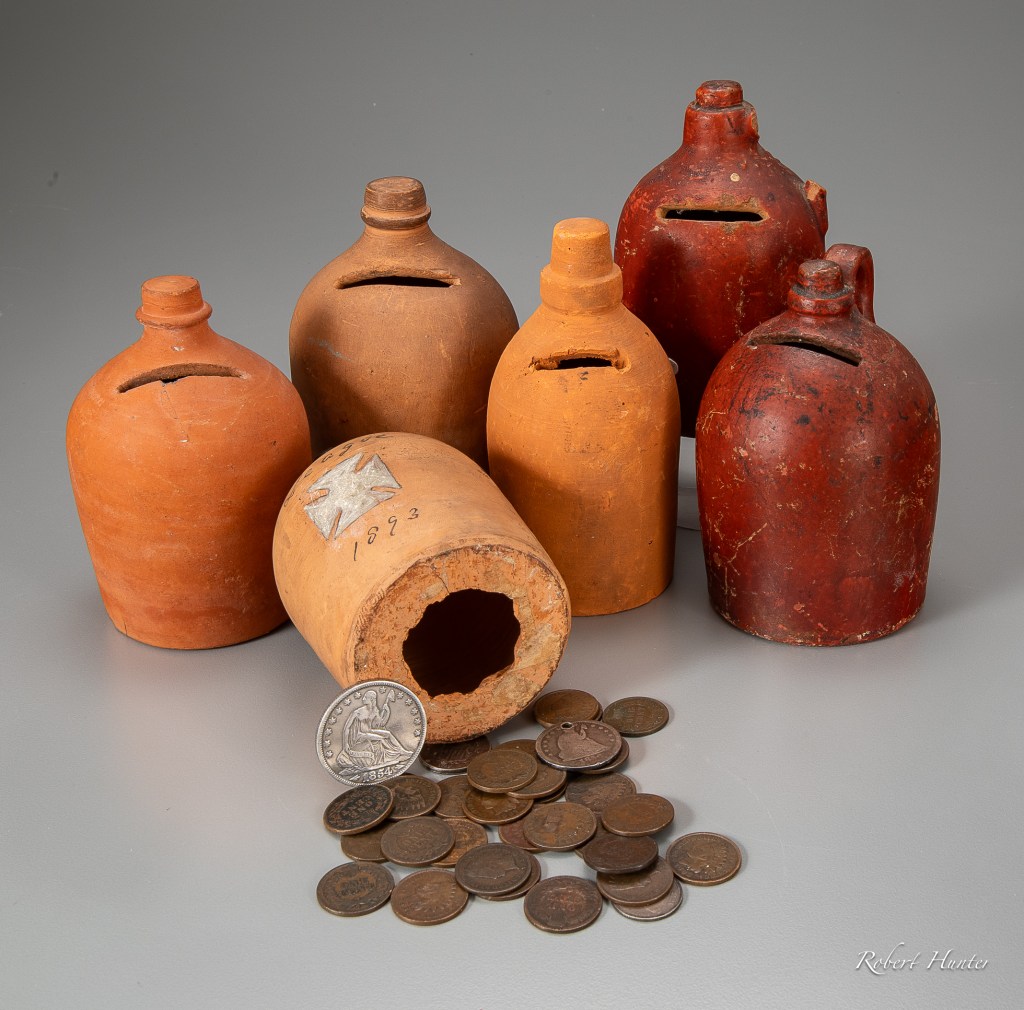
Robert Hunter is a pioneering anthropological archaeologist and ceramics scholar whose groundbreaking, wide-ranging research has fundamentally shaped the study of early American and British ceramics as material culture embedded in social practice, identity, labor, and exchange. Trained as an anthropologist (B.S., Virginia Commonwealth University, 1978; M.A., College of William & Mary, 1987), Hunter has spent more than four decades conducting intensive, context-driven archaeological research across Virginia and North Carolina, integrating stratigraphic excavation, documentary evidence, and close object analysis to reconstruct the lived worlds of potters, consumers, and communities from the colonial through the early industrial periods. As founding director of the Center for Archaeological Research at William & Mary, he helped institutionalize an anthropological approach to historical archaeology that treated ceramics not as static typologies but as dynamic artifacts of behavior, technology, taste, and power. From 2001 to 2023, as editor of Ceramics in America for the Chipstone Foundation, Hunter expanded the field’s intellectual scope by championing interdisciplinary scholarship that crossed archaeology, art history, history, and anthropology, bringing attention to under-studied wares, production centers, and makers, including enslaved and marginalized potters, while reframing familiar forms—such as shell-edge, creamware, pearlware, and nineteenth-century stoneware—as evidence of global trade, local adaptation, and cultural meaning. His research is widely regarded as transformative for its insistence on context, its rejection of overly broad chronologies in favor of behaviorally grounded interpretation, and its ability to connect humble domestic objects to larger questions of economy, identity, memory, and modernity. In addition to his scholarly publications and editorial leadership, Hunter is a respected lecturer, curator, and consultant whose work continues to influence museums, collectors, and archaeologists, and whose ongoing writing and research extend an anthropological vision of ceramics as one of the most revealing material records of everyday life in the early Atlantic world.
 Digging Into Ceramics